Nipple Drinker Technical Guide: Selection, Pressure Setting, Installation Height and Clearing Blockages
Water is the bird’s most important nutrient, and any restriction in access to it directly affects feed intake and growth. Nipple drinkers are the most common watering system in industrial houses because they keep water in a closed line. But if this closed system is not selected, set and cleaned correctly, it hides its own problems: a blocked nipple, low pressure or a line with biofilm looks fine from the outside.
This article covers nipple selection, line pressure setting, installation height, the flow test, and flushing and clearing blockages. The number of birds per nipple and line length are covered in the article “Number of feeders and drinkers in a house”. Technical figures are quoted from the Ross Management Handbook (2025) and the Cobb guide.
Why nipple drinkers?
For the best broiler performance, the Cobb guide recommends a closed drinking system. Cobb’s reasons: the likelihood of water contamination in a closed nipple system is lower than with open drinkers, water waste is lower, and unlike open drinkers no daily cleaning is needed. Cobb then adds an important warning: in a closed system, flow must be measured regularly, because it is impossible to tell by looking whether all the nipples are working.
Choosing a nipple: high-flow or low-flow?
Cobb describes the two common nipple types as follows:
| Type | Operating flow | Characteristic (Cobb) |
|---|---|---|
| High-flow | 80 to 90 mL/min | Holds a drop at the end of the nipple; has a cup (drip tray) to collect excess water |
| Low-flow | 50 to 60 mL/min | Usually has no cup; pressure is set so that the water flow meets the birds’ needs |
Ross also recommends rearing with 360-degree nipples where possible, to make access to water easier for the birds.
Other selection criteria:
- Material: all-stainless nipples are more resistant to cleaning acids and hard water. For example, according to the product specifications on this site, the stainless steel broiler nipple pin has an all-stainless body and pin with 360-degree rotation, while the semi-stainless nipple pin has a steel pin with a polymer housing.
- Bird type: broiler and layer nipples differ; according to the product specifications on this site, the semi-stainless layer nipple has a 180-degree vertical operating angle and is presented for layers, breeders, quail and partridge.
- Pipe: round or square pipe and single- or two-arm cups must be compatible with the nipple and clamps.
- Follow the manufacturer’s instructions: Ross stresses that the recommended flow for each age should be set according to the recommendation of the nipple’s own manufacturer.
Line pressure and pressure regulator
Inlet pressure
According to Cobb, the nipple system should be pressurised by an overhead tank or a pump:
- Overhead tank pressure of at least 2 bar.
- With a pump system, 2.8 bar up to the control room, with a pressure-reducing valve in the line so that a constant 2 bar reaches the nipple system.
Pressure regulator at the start of the line
The inlet pressure is too high for the nipples; the regulator at the start of each line lowers the pressure to a level that suits bird age. In regulators with an indicator tube (standpipe), the height of the water column shows the pressure. Cobb recommends adjusting the pressure in these systems in 5 cm steps, according to the manufacturer’s instructions.
Signs of incorrect pressure according to Cobb:
- Water in the cups: in a cup system, if water collects in the cup, the pressure is too high. Birds should not drink from the cup.
- More pressure does not mean more intake: increasing pressure does not raise water consumption.
- Low pressure, low intake: very low pressure can reduce water consumption by up to 20 percent. Cobb explains that a bird always drinks for about the same length of time (under one minute); if the pressure is low, it gets less water in that time.
According to the product specifications on this site, the Turkish-made pressure regulator has a silicone diaphragm and a water level indicator and is presented for lines up to 120 m; the Iranian regulator has a pressure adjusting screw, a sight-glass indicator and a flushing valve.
Slope regulator
If the house floor slopes, pressure does not stay the same along the line. Cobb recommends installing one slope regulator for every 10 cm drop in floor height so that water flow is even along the whole house. Ross also considers it necessary to install slope regulators according to the manufacturer’s instructions.
Installation height and nipple spacing
In short, according to Ross, the nipple is installed at the chick’s eye level in the first days and raised as the birds grow; the bird should stretch its neck slightly to drink while its feet remain on the ground. Cobb gives a simple rule: the bird should always stretch slightly upwards and never lower its head or jump to trigger the nipple pin. Ross warns that a low nipple makes the bird tilt its head and spill water onto the litter. Daily height adjustment is done with the line winch (article Line winches and lifts).
On layout, Cobb says a bird should not have to walk more than 3 metres to find water and nipple spacing on the pipe should be no more than 35 cm.
The flow test: how much water does each nipple deliver?
The Cobb guide gives a simple method with a graduated container: the container is held under a nipple on a line the birds are drinking from, the pin is pressed, and the volume of water in 30 seconds is recorded. The expected volume according to Cobb:
| Age | Water volume in 30 seconds |
|---|---|
| 0 to 7 days | 20 mL |
| 8 to 14 days | 25 mL |
| 15 to 21 days | 30 mL |
| 22 to 28 days | 35 mL |
| 29 to 35 days and over | 45 mL |
Ross recommends measuring flow weekly at no fewer than three points on each line. According to Ross, higher-than-expected flow increases leakage and wet litter, and lower flow can lead to dehydration. A difference in flow between the start and end of a line is usually a sign of blockage, incorrect pressure or an uncompensated slope.
Clearing blockages and flushing the line
Why do nipples block?
The two main causes of blockage are biofilm and scale. According to Ross, biofilm forms inside water pipes and, if not removed regularly, reduces water flow and contaminates drinking water. Ross names several aggravating factors: biofilm forms faster on plastic pipes and tanks, and adding vitamins and minerals to drinking water increases biofilm and deposits in the pipes. In water high in minerals (especially calcium or iron), scale is added as well.
Daily flushing during the cycle
According to Cobb, all modern watering systems should be flushed (cleaned with a strong flow of water) at least once a day, or at a minimum three times a week. A pressure of 1 to 2 bar creates the velocity and turbulence needed to dislodge biofilm, and flushing time is about 2 seconds per metre of line. In hot weather, flushing more than once a day may be needed to keep the water cool.
Ross also recommends flushing nipple lines 1 to 2 hours before chick arrival and twice a day during the first 4 days, so that chicks receive cool, fresh water.
Full cleaning between cycles
The Ross programme for the water system between cycles:
- Drain the pipes and overhead tanks and clean the pressure regulator.
- Flush the lines with clean water and scrub the overhead tanks to remove scale and biofilm.
- Circulate disinfectant solution through the lines from the overhead tank, without trapping air.
- Use peroxygen compounds to remove biofilm, because physically cleaning the inside of the pipe is not always possible. Ross strongly recommends using a cleaner before a disinfectant before every cycle.
- In mineral-rich water, use a descaler.
- Flush all chemicals from the system before the birds drink.
How is a blocked nipple found?
The flow test with a graduated container (previous section) at several points on each line reveals low-flow nipples. A nipple that still has low flow or drips after flushing and cleaning should be replaced.
Common mistakes
- Raising pressure to increase intake: according to Cobb, more pressure does not bring more intake, and water in the cups is a sign of excessive pressure.
- Very low pressure: up to 20 percent lower water intake (Cobb).
- Not installing slope regulators on a sloping floor: one regulator for every 10 cm of drop (Cobb).
- Relying on looks instead of a flow test: in a closed system, nipple failure is not visible (Cobb).
- Not flushing during the cycle: biofilm reduces water flow (Ross and Cobb).
- Leaving chemicals in the line: the line must be fully flushed before the birds drink (Ross).
Frequently asked questions
What is the right pressure for nipple drinkers?
According to Cobb, the system inlet pressure is 2 bar, and the regulator at the start of each line lowers the pressure according to bird age and the manufacturer’s instructions; in standpipe systems, in 5 cm steps. Water in the cups is a sign of excessive pressure.
How are blocked nipples cleared in a poultry house?
By regular flushing (at least daily, or at a minimum three times a week at 1 to 2 bar, according to Cobb) and full cleaning between cycles with a cleaner, a peroxygen compound for biofilm and a descaler for hard water (Ross). A faulty nipple should be replaced after cleaning.
How high should nipple drinkers be?
According to Ross, at the chick’s eye level in the first days, and afterwards so that the bird stretches its neck slightly while its feet stay on the ground. The bird should not lower its head or jump to drink (Cobb).
Are high-flow or low-flow nipples better?
Both have their uses. According to Cobb, a high-flow nipple at 80 to 90 mL/min works with a cup, and a low-flow nipple at 50 to 60 mL/min usually works without one. The number of birds for each type is given in the article on the number of feeders and drinkers.
Next step: nipple drinker inquiry
To select nipples, regulators and pipes, send the following information: the length and number of lines, the bird type, the water source (pump or overhead tank), the house floor slope and, if possible, the result of a water hardness test. A Toyooran Sanat Pouya specialist will recommend the line components. See also the drinking equipment and the drinking section of the “Broiler house equipment checklist”.
Send the line lengths and water source.
Related products
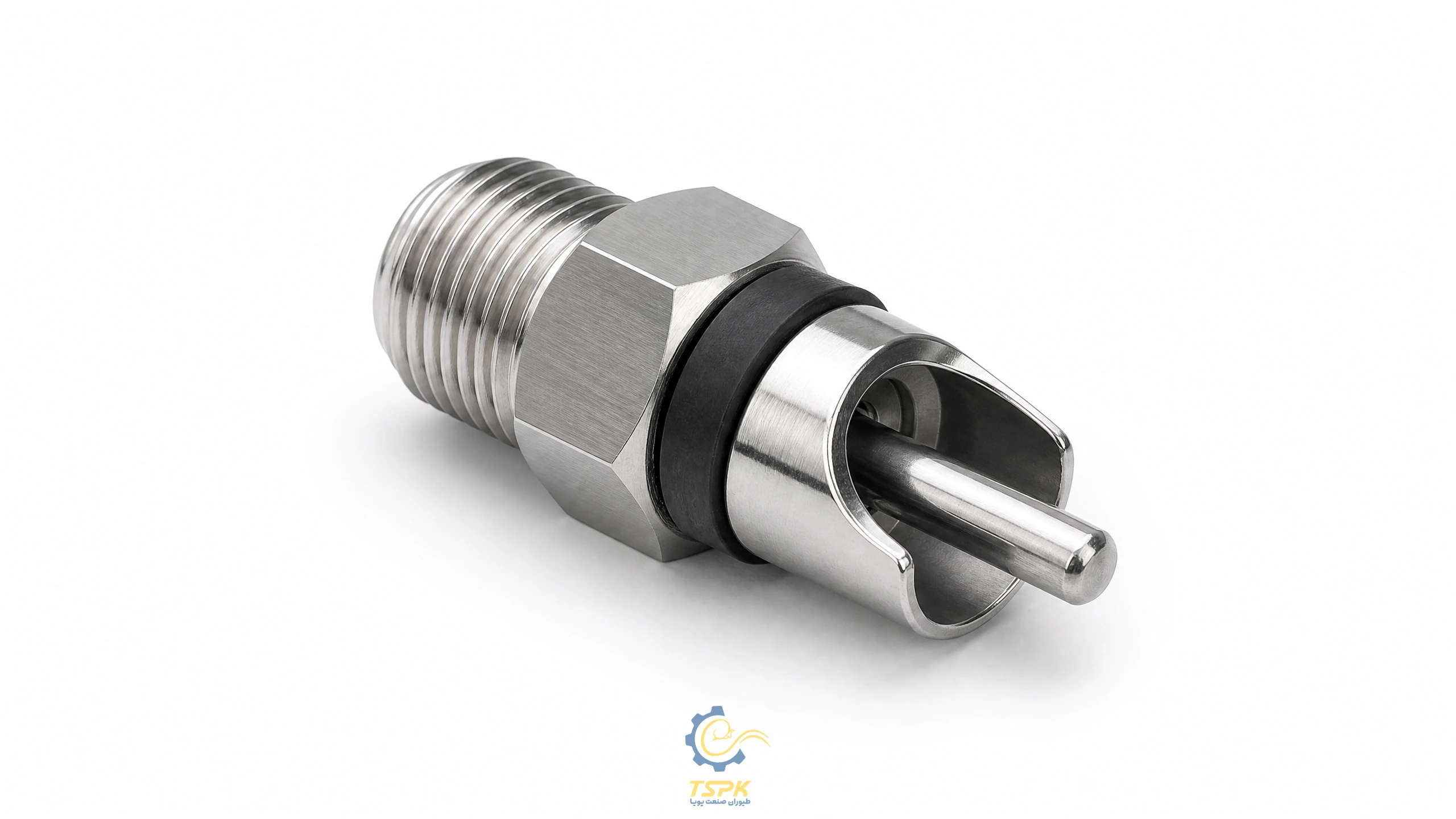
Stainless Steel Broiler Nipple Pin
Material: Full stainless steel
View product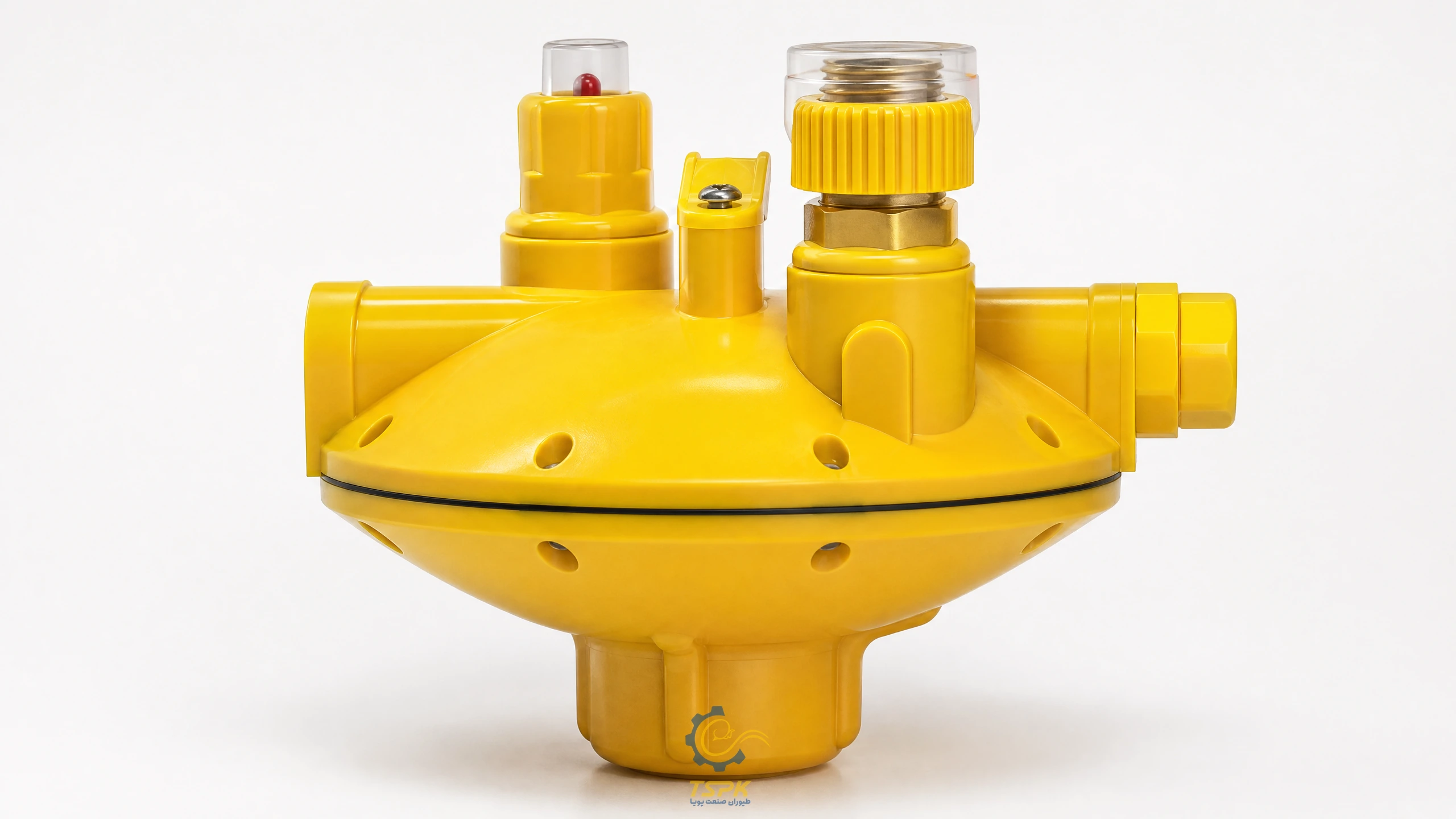
Turkish-Made Pressure Regulator
Capability: Precise adjustment of the line’s hydrostatic pressure
View product
Topic: Feed and water
Category: Engineering technical guide
Tags: Feed and water, Nipple drinkers, Pressure regulator, Water line flushing
Published: 2026-10-20T10:18:18+03:30
Sources
- Cobb-Vantress. Broiler Management Guide, Nipple Systems (installation and management recommendations, Water Flow Meter) and 4.2 Flushing.
- Aviagen. Ross Broiler Management Handbook (2025), Section 5: Nipple Drinkers; Section 2: Flushing; Cleanout: Cleaning the Water System.
- Product specifications: drinking category on the Toyooran Sanat Pouya website.