Feeding and Drinking Line Winches and Lifts: Selection, Installation and Maintenance
In a broiler house, the height of the feeding and drinking lines does not stay the same throughout the cycle: a day-old chick must see feed and water in front of its eyes, while a forty-day-old bird should stretch its neck slightly to drink. This daily or every-few-days height change is made by the winch (lift): a geared unit that raises and lowers the whole line at once by means of cable and pulleys. At the end of the cycle, the same winch lifts the lines up to the roof so that the litter can be removed and the house washed.
The winch is a small item in the cost of equipping a house, but if it is poorly chosen or badly installed, the line tilts, some birds lose good access to water and feed and, in the worst case, the cable snaps and the line falls onto the litter. This article explains what a winch does, how it is chosen and installed, and what maintenance it needs.
What does a winch do in a poultry house?
A lift system consists of three parts:
- Winch: a manual or motorised gearbox with a drum around which the main cable is wound. According to the product specifications on this site, the ceiling winch for nipple drinker lines has a cast-iron body and geared movement, with a stated load capacity of 500 to 700 kg.
- Main cable: runs along the line under the roof.
- Suspension points (drops): at regular intervals, secondary cables come down from pulleys and hold the line. Turning the winch winds in or pays out the main cable, and all the drops rise or fall at the same time.
On chain feeders, the Cobb guide says the system can be suspended with a winch or mounted on legs, and that a winch system makes adjustment easier. Ross also considers adjusting chain feeder height possible with a winch or adjustable legs. On pan and nipple lines, too, the winch is the main tool for height adjustment.
Why does height adjustment matter?
The winch exists so that the line is always at the right height for bird age. The criteria in the guides:
| Line | Height criterion | Source |
|---|---|---|
| Pan feeder | Pan rim level with the top of the bird’s breast | Ross |
| Chain feeder | Trough rim level with the bird’s back | Cobb |
| Nipple drinker, first week | Nipple at the chick’s eye level; back at 35 to 45 degrees to the ground | Ross |
| Nipple drinker, after 7 days | Back at about 75 to 85 degrees to the ground; feet on the ground | Ross |
The consequences of incorrect height are clear in the sources. Cobb says that if birds tilt the pan to reach the feed, the pans are too high. Ross writes that a water line that is too high for bird age restricts water intake, and a line that is too low causes wet litter. Cobb also warns that if chain feeder height is not adjusted as the birds grow, the line itself becomes an obstacle in the house.
The practical conclusion: the winch must be smooth and precise enough for adjustment several times a week to be done effortlessly and evenly along the line.
Winch selection criteria
Load capacity
The winch must carry the full weight of the line with a safety margin: pipes, pans or nipples, the pressure regulator and, on a drinking line, the weight of the water in the pipe. On a feeding line, the weight of the feed in the pipe and pans is added as well. The rated capacity should be obtained from the winch manufacturer and compared with the estimated weight of the line. Winch manufacturers’ manuals usually state a specific load limit for the unit and stress that it must not be exceeded.
Manual or motorised
A manual winch is simple and inexpensive, and sufficient for short lines or infrequent adjustment. In long houses with several lines, a motorised winch or connecting several lines to a common shaft makes adjustment faster and more even. The choice depends on line length, the number of lines and how often adjustment is needed.
Material and mechanism
The house environment is humid and contains ammonia and cleaning agents. A durable body, a sealed gearbox and galvanised or stainless cable all contribute to the winch’s durability. An automatic gearbox brake or lock is also important so that the line does not drop by itself under load.
Compatibility with the line
The line specifications must also be compatible with the lift. For example, according to the product specifications on this site, some inlet windows can also be “connected to a manual winch or an automatic gear motor”; in other words, winches are not only for feed and water, and the purchase should specify which system each winch is for.
Installation points
Lift installation is usually part of installing the whole line, but a few points should be checked at handover. The example below is from the installation manual of a foreign feeding and drinking line manufacturer; exact figures for each system should be taken from the manual of that line’s manufacturer:
- Suspension point spacing: in this manual, the recommended drop spacing is 2.4 m and should not exceed 3 m. Wider-spaced drops mean the line sags between two points and the height is uneven.
- Winch location: according to the same manual, the winch is installed on a solid support in the middle of the line that rests on at least three roof beams or trusses, and the winch drum should be exactly in line with the main cable.
- Support next to the hopper: for a feeding line, the same manual requires the line to be supported within 30 cm of the hopper, in addition to the hopper’s own suspension.
- Cable tension: when installing the drops, the main cable should stay taut between suspension points.
- Drum orientation: the manual for the same winch recommends installation with the drum axis horizontal so that the cable does not catch in the gears.
After installation, the line should be tested at several heights: fully lowered, mid-height and fully raised. In each position, the line should be level along its entire length. On a sloping floor, Ross and Cobb recommend fitting slope regulators on the drinking line; the winch alone does not compensate for the floor slope.
Winch and cable maintenance
A winch usually works silently until the day it jams. Regular maintenance prevents that day. An example maintenance schedule from a winch manufacturer’s manual:
| Task | Frequency (according to the manufacturer’s manual) |
|---|---|
| Check gearbox oil level | Every 6 months |
| Change gearbox oil | Every 12 months |
| Grease the drum shaft | At least once per rearing cycle |
The same manual warns that if the drum shaft runs dry, loud noise and damage to the winch can be expected. The type of oil and grease should be taken from the manual of that winch’s manufacturer.
Inspection tasks between cycles, at the same time as washing the house:
- Cables: check for wear, kinks, broken strands and rust along the whole length, especially next to pulleys and clamps. A damaged cable should be replaced, not repaired.
- Pulleys: free rotation with no play or cracks.
- Clamps and drops: cable clamps tight, and the line level after being fully raised and lowered.
- Winch support: bolts tight and the roof beam sound.
- Before washing: raise the lines fully so that water and cleaning agents do not spray directly onto the gearbox.
Common mistakes
- Choosing a winch without calculating the weight of the full line: the weight of water or feed in the line is forgotten.
- Widely spaced drops: the line sags and the height is not the same along the line.
- Not adjusting height as the birds grow: Ross and Cobb link height to bird age and size, not to a fixed calendar.
- Not lubricating the gearbox and shaft: a dry winch is damaged.
- Continuing to work with a worn cable: a snapped cable means the line falls onto the litter.
- Installing the winch on a weak support: the load of the whole line is concentrated on a few bolts.
Frequently asked questions
What does a feeding and drinking line winch do?
Using a main cable and several suspension points, it raises and lowers the whole line at once so that feeder and drinker height can be adjusted as the birds grow, and lifts the line for washing at the end of the cycle.
How high should feeding and drinking lines be?
According to Ross, the pan rim is level with the top of the bird’s breast; the nipple is at the chick’s eye level in the first week and afterwards at a height where the bird’s back forms an angle of about 75 to 85 degrees with the ground when drinking. For chain feeders, Cobb wants the trough rim level with the bird’s back.
What maintenance does a winch need?
Inspection of cables and pulleys between cycles, greasing the drum shaft, and checking and changing the gearbox oil according to the manufacturer’s instructions. For example, one manufacturer’s manual recommends checking the oil every 6 months, changing it annually and greasing the shaft every cycle.
What is the spacing of the line’s suspension points?
It depends on the manufacturer’s system. In one manufacturer’s manual, the recommended spacing is 2.4 m, with a maximum of 3 m.
Next step: winch and line inquiry
To choose a suitable winch, send the following information: the length and number of feeding and drinking lines, the line type (pan, chain or nipple), the height and type of roof structure, and whether a manual or motorised winch is preferred. A Toyooran Sanat Pouya specialist will recommend the winch and lift components. See also the drinking and feeding equipment; to choose a feeder type, read the feeder comparison.
Send the length and number of lines.
Feeding and drinking line winch inquiry
Related products
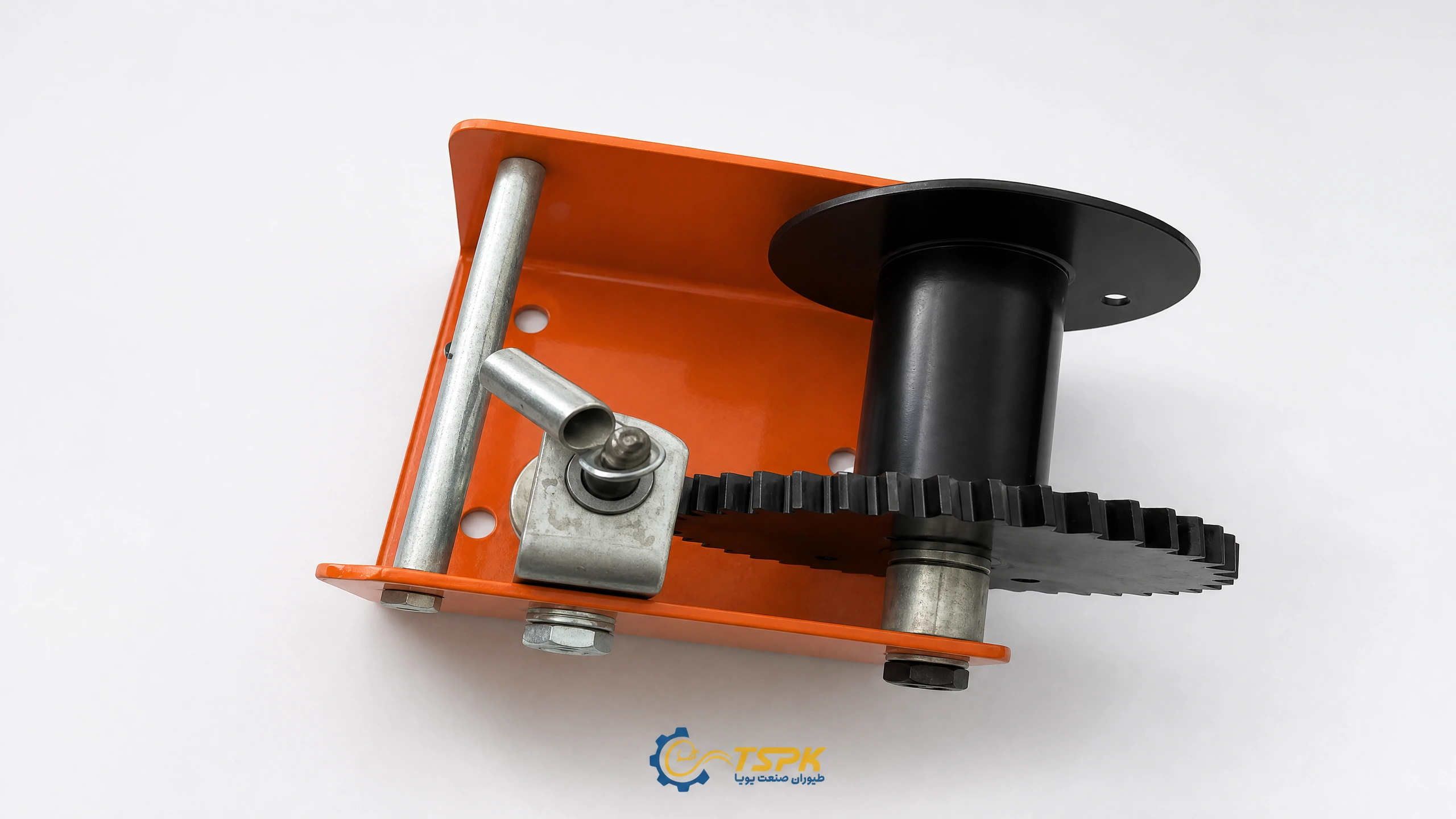
Ceiling Winch for Nipple Drinker Lines
Load capacity: 500 to 700 kg
View product
Topic: Feed and water
Category: Engineering technical guide
Tags: Feed and water, Winch, Line lift, Equipment maintenance
Published: 2026-10-18T10:09:34+03:30