How Is the Ventilation Capacity of a House Calculated?
Accurately calculating the ventilation capacity of a poultry house is one of the most critical factors in successful poultry production. Proper ventilation means controlling temperature and humidity and removing toxic gases such as ammonia from the house. Neglecting it can lead to respiratory disease, a poorer feed conversion ratio and a marked increase in flock mortality.
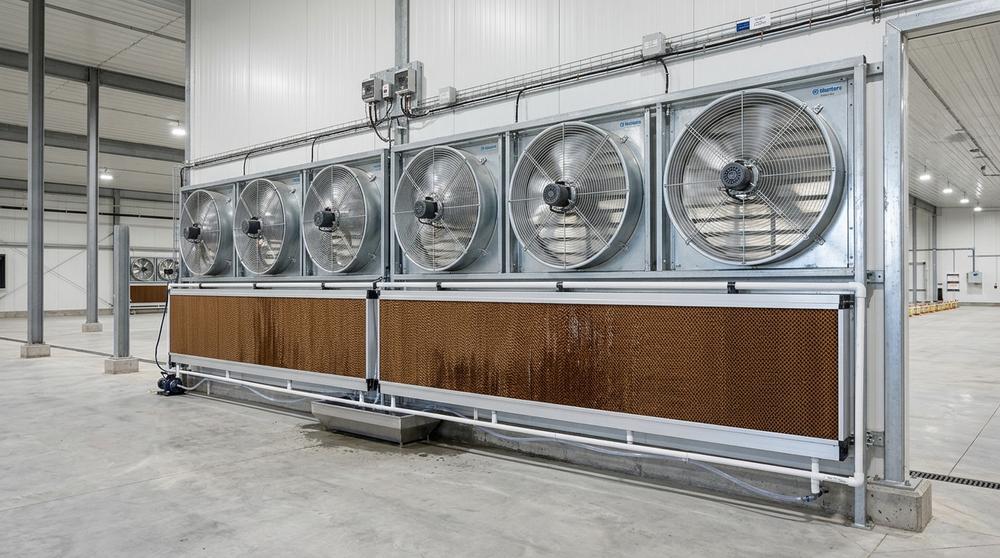
The importance of ventilation in a modern poultry house
In today’s high-density production systems, birds generate a great deal of heat. Especially in the second half of the broiler rearing period, removing this heat and supplying enough oxygen becomes an engineering challenge. Correct ventilation not only supplies fresh air but also keeps the litter dry and prevents moisture build-up.
Methods for calculating ventilation capacity
To calculate ventilation capacity accurately, several key parameters must be considered. These include the total house volume, the live weight of the flock at the end of the cycle and the regional climate.
- Step one: calculate the house volume (length × width × average height)
- Step two: determine the maximum live weight of the flock (number of birds × target weight)
- Step three: determine the required airflow using the strain source (Ross/Cobb/Aviagen) and the fan curve at the house’s actual static pressure, not an unconditional market figure.
The common figure of “5 to 7 m³/h per kilogram of live weight”, without static pressure, fan type, climate and rearing stage, is not a design basis and is not given on this page as a validated rule of thumb. The final figure is set by the engineer from the fan datasheet and the house geometry.
Tunnel ventilation
On hot days, minimum ventilation gives way to tunnel ventilation. The aim of tunnel ventilation is to create fast airflow along the house, producing a “wind chill” effect on the birds’ bodies.
- Air velocity should be designed at 2.5 to 3 m/s.
- To reach this velocity, the house cross-section must be calculated and high-capacity 140 cm exhaust fans installed at the end of the house.
Get a free ventilation calculation consultation
Common ventilation mistakes
Many operators buy exhaust fans based solely on their nominal capacity, without considering the static pressure drop caused by cellulose pads or inlets. As a result, the fans cannot reach their actual capacity in practice and the house suffers from a lack of air.
A smart climate control system (PLC) that adjusts inlets and fans automatically is the best way to prevent human error in ventilation management.
Category: Engineering technical guide
Published: 2024-09-05
Sources
- Management guides for commercial strains (Ross / Cobb / Aviagen) — exact reference after engineer approval